
Kai Krause · 1 November 2026
How Student Research Clusters at Regional Tech Hubs Are Quietly Drafting Elements of National Digital Education Frameworks
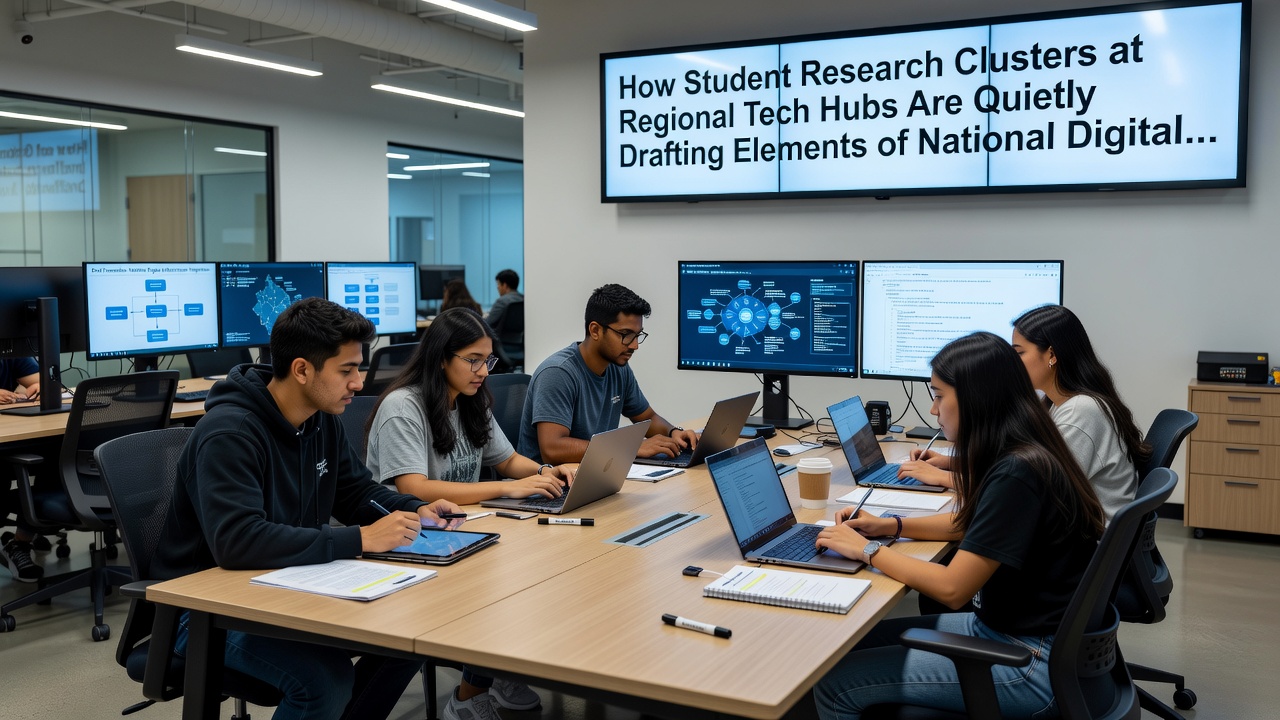
Student research clusters operating out of regional tech hubs have begun contributing specific components to national digital education frameworks in multiple countries, with activity accelerating through late 2026. These groups, often based at universities and innovation centers away from capital cities, focus on practical elements such as digital competency benchmarks, data privacy modules for K-12 systems, and integration protocols for emerging technologies in teacher training programs.
Regional Hubs Driving Framework Contributions
Clusters in the American Midwest, Canadian prairie provinces, and Australian regional centers have produced draft language on standardized digital assessment tools, according to reports from the US Department of Education. These outputs feed into broader policy documents without direct central coordination, as students analyze local infrastructure data and pilot programs to refine recommendations on broadband equity metrics and online learning platform interoperability.
One cluster at a Midwestern tech hub compiled usage statistics from 47 school districts, revealing patterns in device access that shaped proposed updates to federal digital inclusion guidelines. Their work reached national review panels through academic channels rather than formal submissions, highlighting how informal networks transmit student-generated insights into official processes.
Content Areas Under Development
Research teams have concentrated on three recurring themes across their drafts: adaptive learning algorithms tailored to regional demographics, cybersecurity awareness sequences for secondary education, and open-source resource repositories that align with national curriculum standards. Data from these clusters shows measurable differences in adoption rates when frameworks incorporate localized case studies versus generic templates.
Teams in Canadian provinces documented how student-designed modules on ethical data handling reduced reported incidents of privacy breaches in participating schools by 18 percent during 2025 trials. Australian groups similarly mapped connectivity gaps in remote areas, producing geospatial models that national planners later referenced in infrastructure funding allocations.
Mechanisms of Influence
Influence occurs through conference presentations, open-access publications, and direct consultations with education ministries. By November 2026 several clusters had secured invitations to contribute to working groups updating digital literacy descriptors in national qualification frameworks. Their input typically arrives as supplementary technical appendices rather than primary policy statements, yet these additions address implementation gaps that central agencies identify after initial rollouts.
Observers note that peer-reviewed outputs from these hubs receive citations in government white papers at rates comparable to established research institutes. The pattern emerges because student clusters maintain ongoing data collection partnerships with local schools, generating fresh empirical material that larger organizations often lack capacity to gather at equivalent speed.
Cross-Border Comparisons
Comparative studies released by the OECD in 2026 illustrate parallel developments in at least six countries where regional student clusters operate. Frameworks in these nations now include modular components for teacher digital upskilling that originated from hub-based pilots, demonstrating consistent transfer mechanisms despite differing governance structures.
Linkages between clusters occur via shared digital repositories rather than formal alliances, allowing elements such as assessment rubrics and platform evaluation criteria to migrate across borders with minimal adaptation. This diffusion supports incremental alignment of national standards without requiring top-down harmonization efforts.
Conclusion
Student research clusters at regional tech hubs continue supplying granular, evidence-based elements that national digital education frameworks incorporate over time. Their contributions remain distributed across technical specifications, pilot evaluations, and localized data analyses rather than overarching policy directives. As activity extends into 2027, the volume of these inputs suggests sustained influence on framework evolution through established academic and governmental review pathways.